Diagnostic Testing
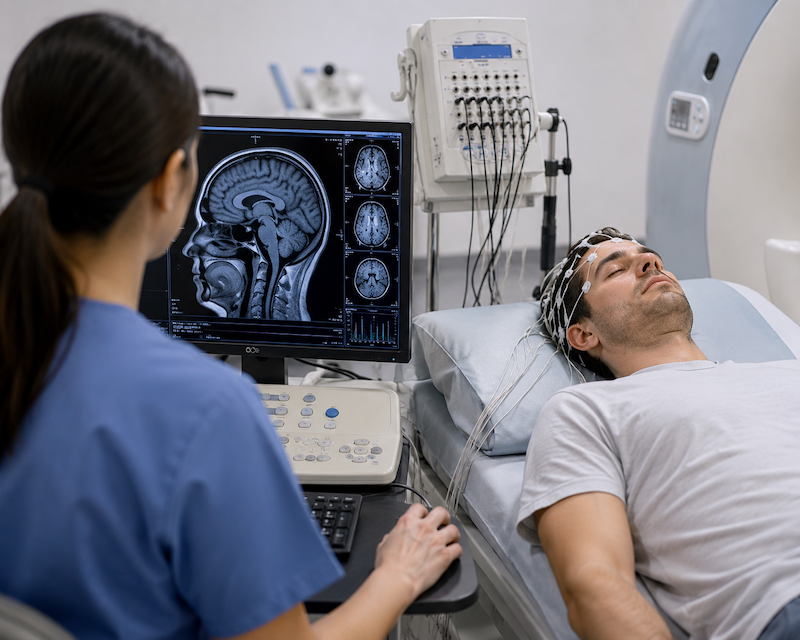
Diagnostic testing plays an important role in helping a neurologist investigate symptoms, confirm a diagnosis and determine the most appropriate treatment or management plan. Following a detailed medical history and neurological examination, Dr Debo Gorai may recommend further investigations to better understand the cause of symptoms affecting the brain, spinal cord, nerves or muscles.
Depending on your individual presentation, neurological diagnostic testing may include X-rays, CT scans, MRI scans, EEGs, nerve conduction studies and EMG testing. Some tests may be performed directly by the neurologist, while others may require referral to a radiology or pathology provider. These investigations can provide important information about nerve function, muscle activity, brain activity and structural changes that may be contributing to neurological symptoms.
Diagnostic testing may be used when investigating conditions such as stroke, epilepsy, Parkinson’s disease, multiple sclerosis, nerve and muscle disorders, motor neuron disorders, cervical dystonia, focal nerve entrapment, wrist drop, foot drop and migraine. It may also form part of the assessment process before treatments such as neurotoxin therapy.